Kids Room Ideas for Boys: Build the Adventure They'll Truly Never Outgrow
Four zones — command center, adventure wall, gear garage, hangout — that turn an ordinary bedroom into headquarters.
 By Malik Ashraf · 12 min read
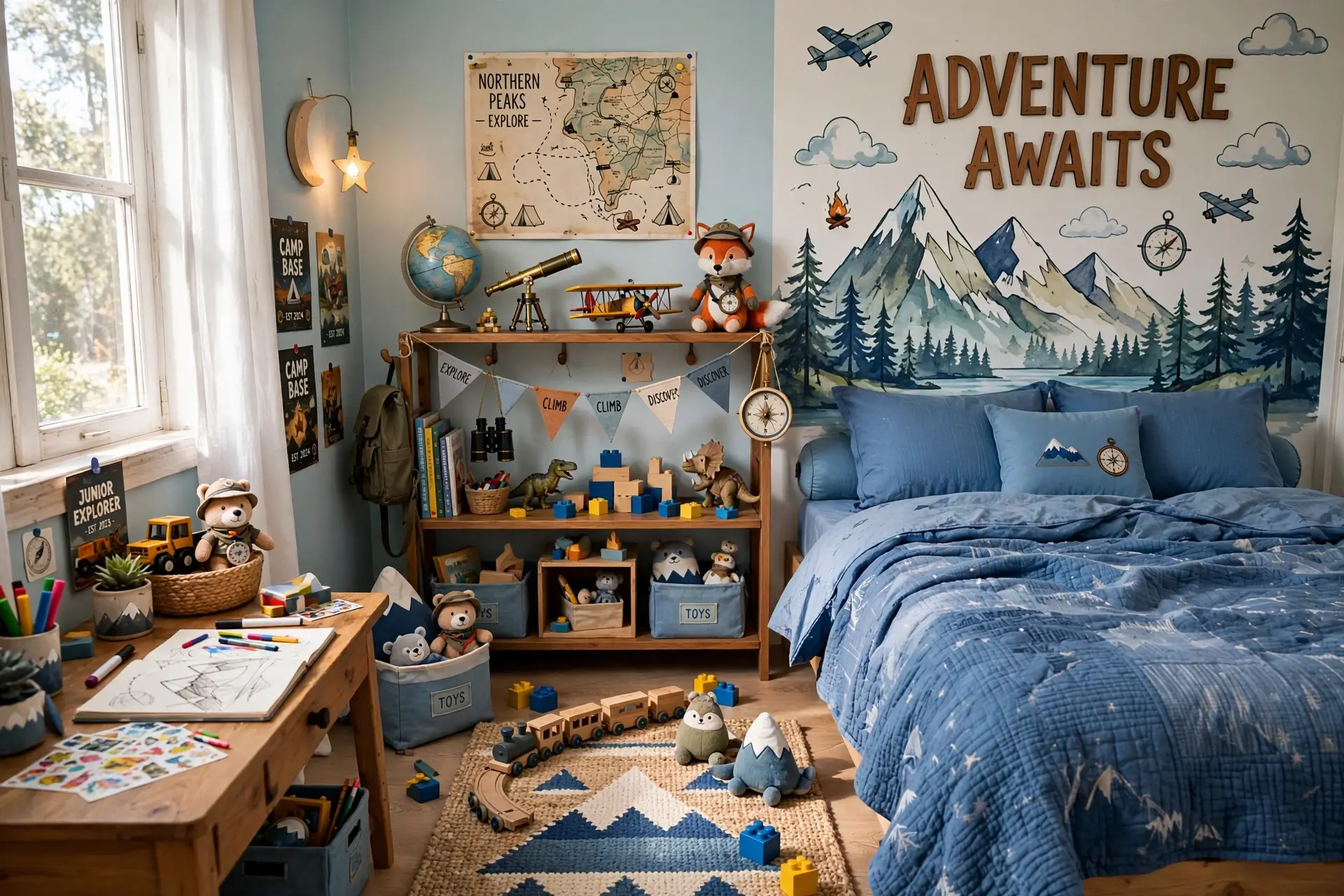 🚀 4 ADVENTURE ZONES
Ask any boy what his room is and he won't say "bedroom." It's headquarters — base camp — the lab. It's where missions are planned (homework), gear is stored (toys, sports equipment, collections of rocks that are definitely important), adventures are imagined (every blanket fort ever), and allies gather (friends, cousins, the dog). The best boys' rooms understand this: they're designed as zones, each with a job. Four zones below, each with a reference photo and a practical blueprint for building it. Get the zones right and the room works at six and still works at sixteen — you just swap the posters. That's the real ROI of zone thinking: the expensive bones (bed, desk, storage) never need replacing, only the cheap skin (bedding, art, decals) evolves. Parents who zone once decorate once; parents who theme hard redecorate every three years.
One principle governs everything: theme in accents, structure in neutrals. The bed, the storage, the walls' base — keep them timeless. The adventure lives in bedding, art, rugs, and decor that can evolve. For more young spaces, see our kids room ideas collection.
⚠️ The Boy-Room Trap
The trap: painting all four walls racing-car red or covering everything in one character theme. It thrills for six months, then you're repainting — and teenagers are embarrassed by toddler themes fast. The fix used through this whole article: bold themes live in changeable layers (bedding, wall decals, posters), while walls and furniture stay flexible. Adventure without the repaint cycle.
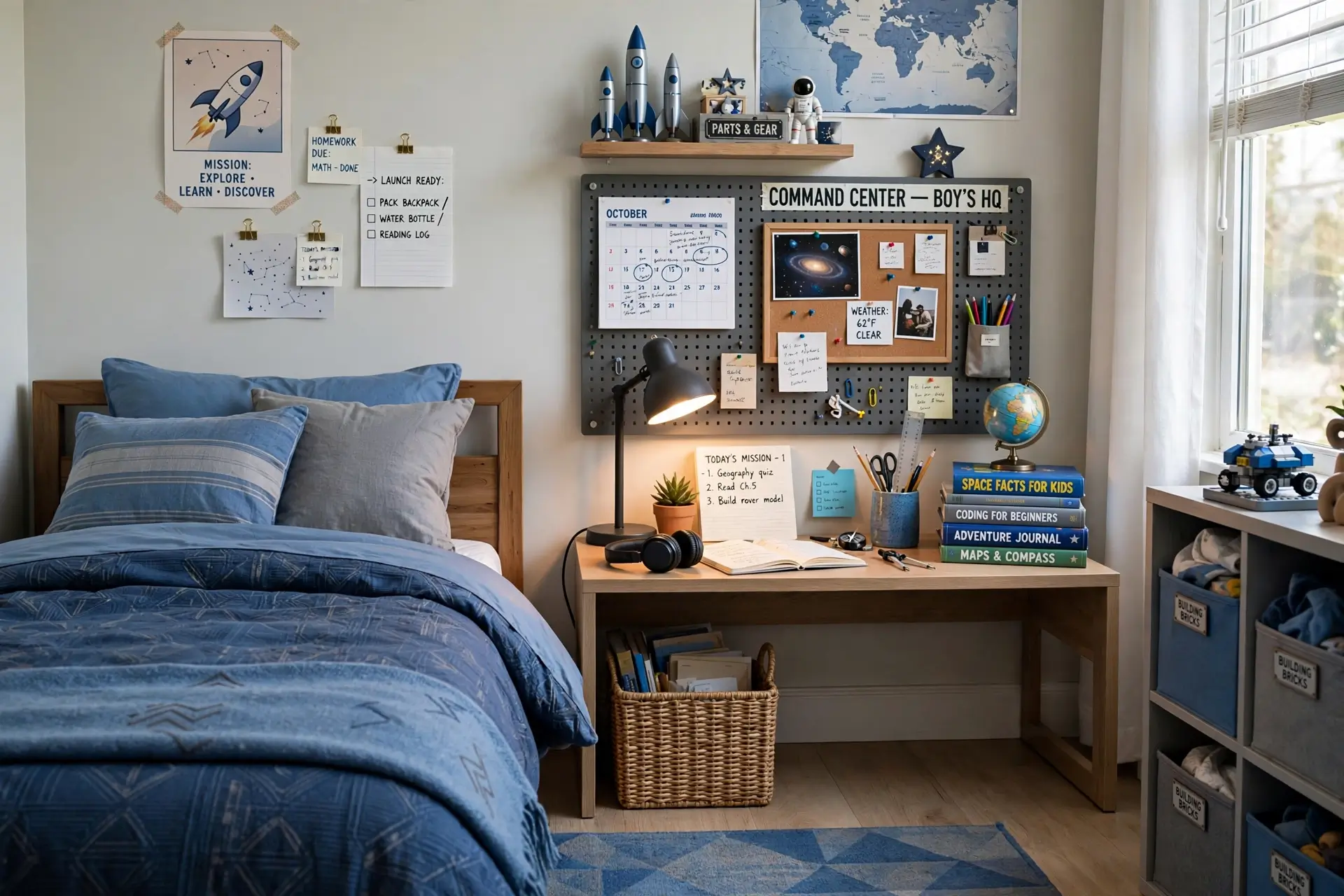 Zone 1 — Command
The Command Center
Every headquarters needs a command center: the bed for rest, the desk for missions (homework, drawing, building). Even young boys benefit from a defined "work" spot — it builds the homework habit before homework gets hard. Keep the desk near natural light, the bed dressed in the room's theme, and the two visually connected so the zone reads as one unit. A pinboard above the desk becomes mission control: schedules, achievements, ticket stubs, the drawing he's proudest of this week. What hangs on the pinboard tells you what matters to him right now — it's the room's newspaper, updated by its editor-in-chief.
📋 Blueprint specs
- Bed: sturdy frame, themed bedding (the easiest theme-swap in the room).
- Desk: near the window, good task lamp, chair that fits him, not an adult.
- Pinboard: cork or magnetic — achievements, art, and plans on display.
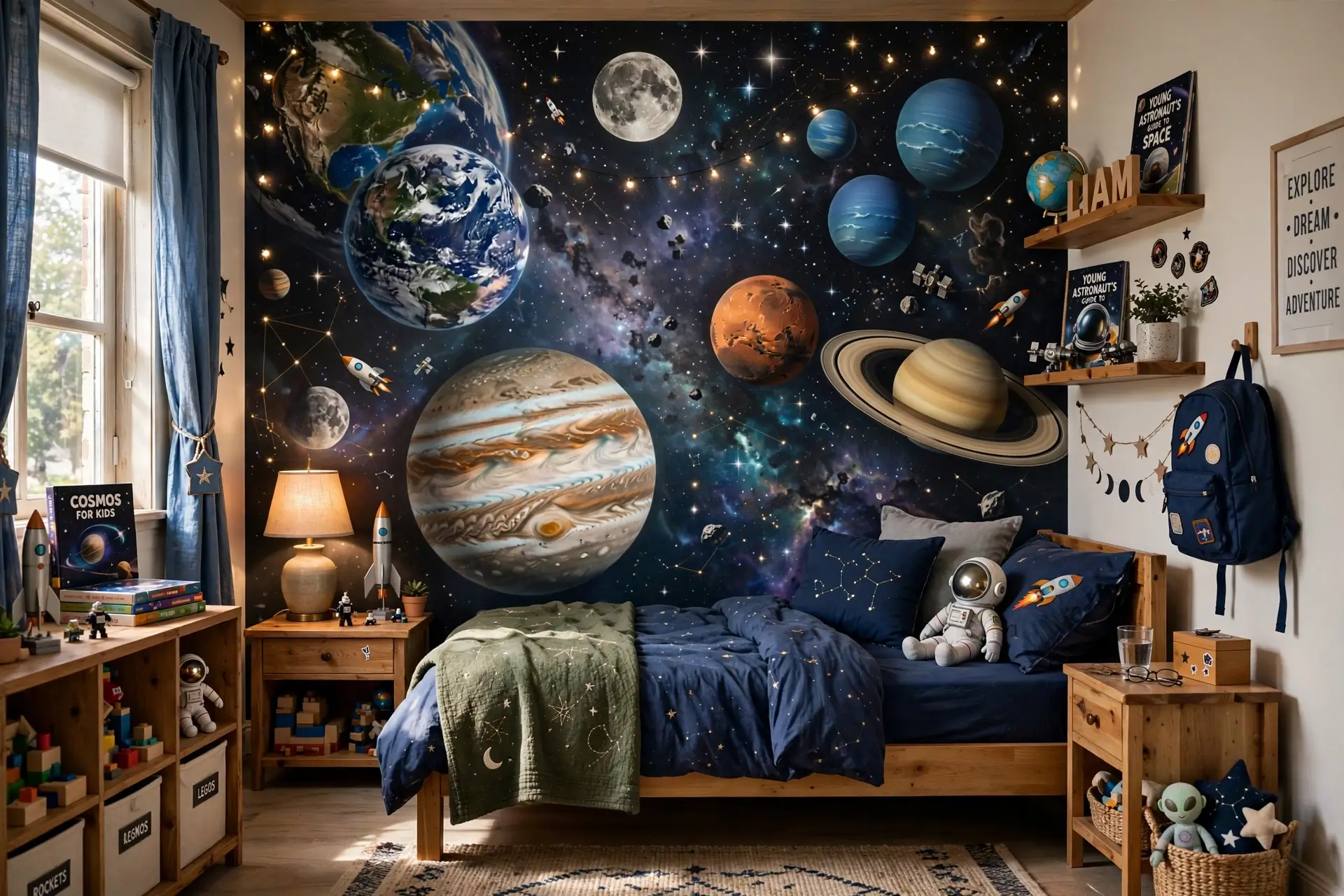 Zone 2 — Adventure
The Adventure Wall
One wall gets to be the adventure — space mural, dinosaur landscape, sports stadium, world map. This is the room's big wow factor and the zone that makes every friend say "cool!" The golden rule: one feature wall, not four. Peel-and-stick murals and large decals are the smart play — dramatic impact, zero paint commitment, removable when the obsession changes (check they're wall-safe per manufacturer instructions). Let him choose the theme; it's his adventure. And resist the urge to make it "tasteful" — a boy's room should have at least one thing that makes adults smile and kids gasp. That's the whole point of being eight.
📋 Blueprint specs
- The wall: behind the bed is classic — it frames the room's hero piece.
- The method: peel-and-stick mural or large decals over a neutral base paint.
- The lighting: a spotlight or string lights on the feature wall doubles its drama at night.
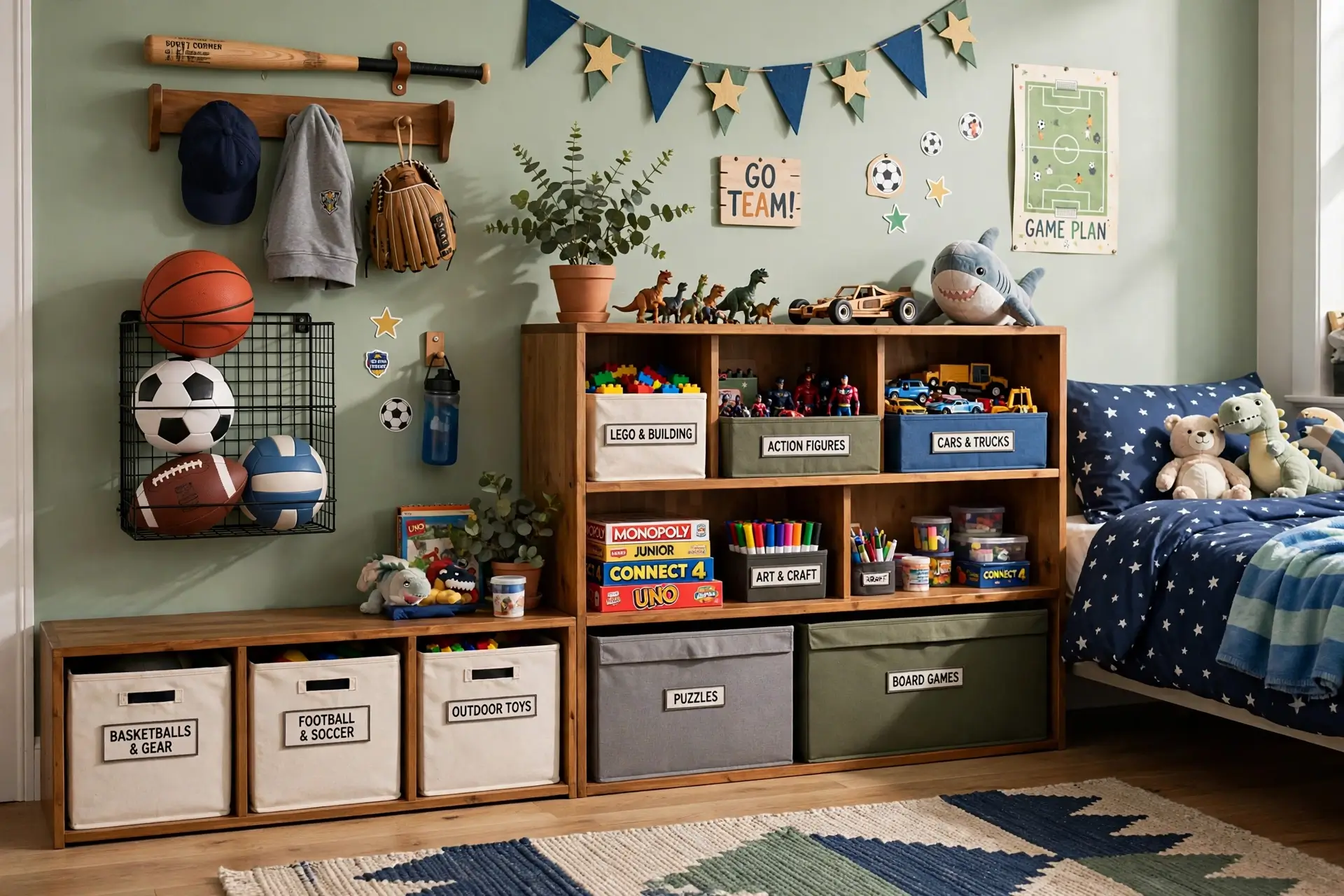 Zone 3 — Gear
The Gear Garage
Boys accumulate gear — balls, bats, building sets, collections of mysterious small objects. Without a system, gear colonizes every surface. The gear garage: labeled bins, open shelving for display-worthy collections, closed storage for the chaos, and a dedicated spot for sports equipment (a ball corner beats balls underfoot). Label with pictures for pre-readers — a photo of the actual balls on the ball bin beats any word. The rule that makes it work: everything has a bay, and everything returns to its bay — even headquarters has motor-pool discipline. Involve him in assigning the bays; a system he helped design is a system he'll actually use.
📋 Blueprint specs
- Open display: one shelf for prized collections — Lego builds, trophies, cool rocks.
- Closed chaos: labeled bins for everything else. Out of sight, out of mind, findable.
- Sports bay: a corner or wall rack for balls and gear — contained, not scattered.
 Zone 4 — Hangout
The Hangout
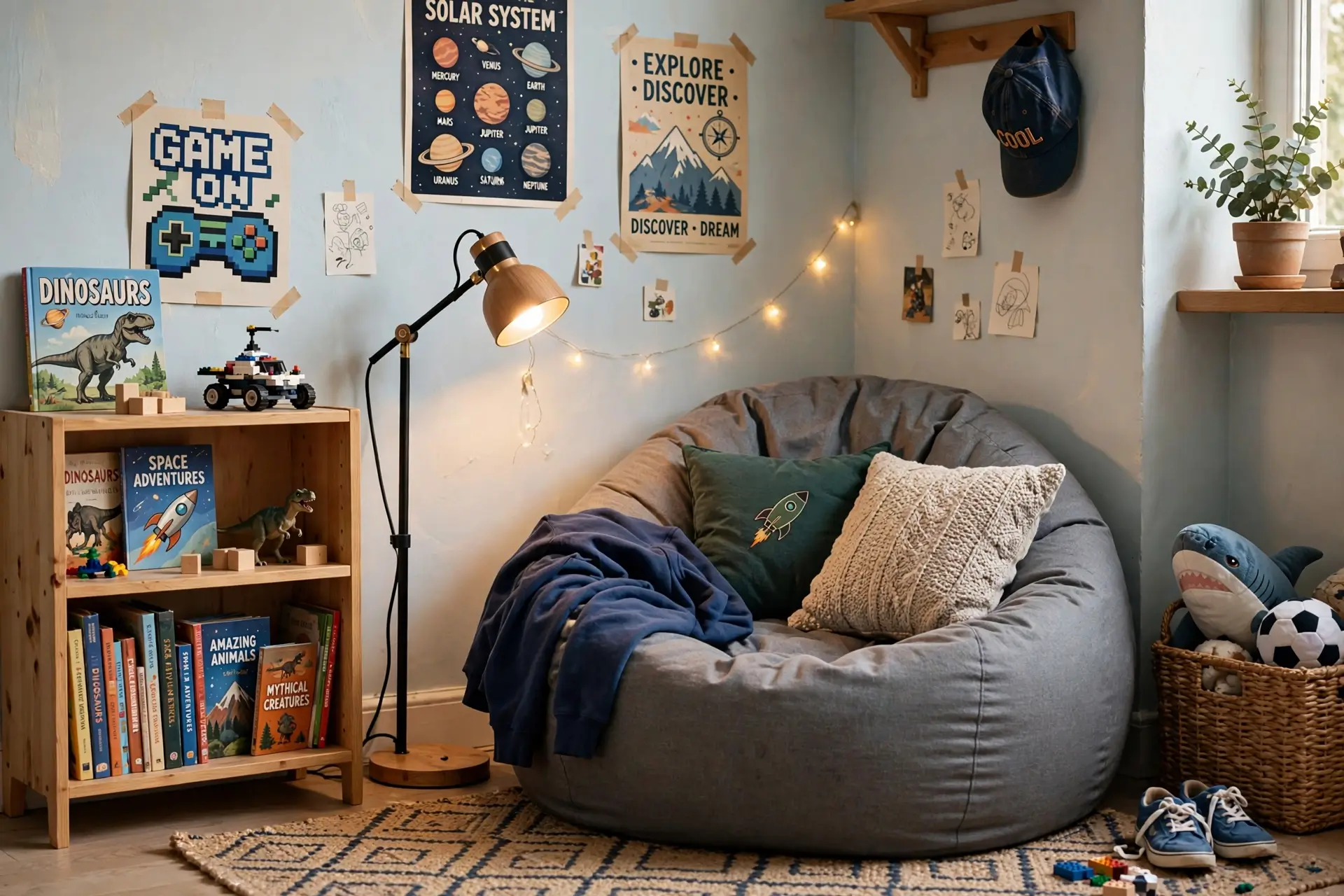
Every HQ needs an off-duty corner: a beanbag or floor cushions, a small bookshelf, a reading light, maybe a rug that defines the spot. Don't skip this zone thinking the bed covers it — beds are for sleep (theoretically), and a dedicated lounge spot keeps the bed from becoming the desk, the dining table, and the sofa. This is where comics are read, friends flop, and daydreams happen. It doesn't need much — comfort and a little separation from the "work" zones. A rug does the defining; the seating does the inviting. Even in a tiny room, a corner with a beanbag and a lamp reads as a separate world. The hangout is also the room's social proof: when friends visit, this is where they land, and a good hangout makes the room the place to be.
📋 Blueprint specs
- Seating: beanbag, floor cushions, or a small armchair — low, loungeable, movable.
- Light: a warm floor or table lamp — hangouts need glow, not overhead glare.
- Books: a small shelf or crate of favorites within arm's reach.
Light the Adventure Right
Most boys' rooms have exactly one light — the ceiling glare — and it does nothing for atmosphere. They need three kinds: Task light at the command center — a good desk lamp for homework and building. Glow light for the hangout — warm string lights or a floor lamp that makes the corner feel like evening camp. Night light with personality — a rocket lamp, star projector, or glow stars for younger boys; a simple warm plug-in for older ones. Lighting is the cheapest way to make zones feel distinct: bright and focused at the desk, warm and low at the hangout. And put the adventure wall on a dimmer or spotlight if you can — drama on demand.
🎂 Age-by-Age Tweaks
Toddler–5: safety first — anchor all furniture to walls, keep small objects up high, soft flooring for tumbles. Zones are simple at this age: sleep, play, and a tiny reading corner. Skip the desk; a small table for coloring is plenty.
6–10: the golden age of themes — go big on the adventure wall, build the gear system early, add the desk as homework appears. This is when the blueprint shines brightest, because kids this age live entirely in their rooms: playing, reading, building, imagining.
11+ (tween/teen): dial themes back to accents, upgrade the desk (homework gets real), add privacy (door sign, personal space rules). The zones stay; the decor matures. Let him lead the redesign — a teen who chooses his room's evolution owns it, and ownership is what keeps it tidy-ish.
🎭 The Theme-Without-Paint Trick
Want the dinosaur/space/sports room without committing the walls? The formula: neutral walls + themed bedding + themed rug + wall decals + themed lamp/prints. Five changeable layers deliver 90% of a themed room's impact, and when the phase ends, you swap textiles — not paint. This is how you say yes to every obsession without repainting every year. Pro move: keep a "theme box" in storage with the retired bedding and decals — younger siblings inherit adventures, and nostalgia is free.
Two Boys, One Room?
The blueprint doubles beautifully: each boy gets his own command center (bed + desk zone, clearly marked as his), they share the gear garage and hangout, and the adventure wall becomes neutral territory — or gets split down the middle with each half themed by its owner. Color-code everything per our shared-room peace treaty — zones, bins, bedding. Bunk beds free the floor for a bigger shared hangout, which is exactly where brotherhood happens. See our kids room ideas collection for the full shared-room system.
Boys Room Mistakes
Theme on all four walls
Full-commitment themes age out fast and repaint slow. Fix: one feature wall + changeable accents.
No gear system
Toys and sports equipment with no home = permanent mess. Fix: the gear garage — every item gets a bay (Zone 3).
Desk as afterthought
No defined work spot = homework on the bed = bad habits. Fix: command center desk early, even a small one (Zone 1).
Forgetting the hangout
All function, no flop-space = a room nobody loves. Fix: even a beanbag in a corner counts (Zone 4).
🤝 The Best-Friend Test
You'll know the blueprint worked when:
- Friends ask to come over — the room becomes a genuine destination, not just another bedroom.
- He shows it off proudly — the adventure wall gets the full tour, the gear gets displayed, the hangout gets claimed by the group.
- It still works in two years — swap the bedding and posters, and the same zones serve an older kid. That's the blueprint paying off: the room grew up without a renovation.
Boys Room FAQs
Keep exploring: the kids room ideas collection keeps growing — including color palettes and shared-room guides — plus bedroom ideas for the grown-ups and wall ideas for that feature wall. Start from the Roomiora homepage if you're new here.
Malik Ashraf
Founder & Editor, Roomiora. Home-design enthusiast sharing real-life room ideas — tested layouts, honest costs, no showroom fantasies.
More about Malik →