Shared Kids Room Ideas That Keep Siblings Happy (and Parents Sane)
Two kids, one room, zero wars — almost guaranteed. Four articles of the peace treaty — zones, bunks, smart storage, and neutral ground.
 By Malik Ashraf · 12 min read
 ✌️ 4 PEACE ARTICLES
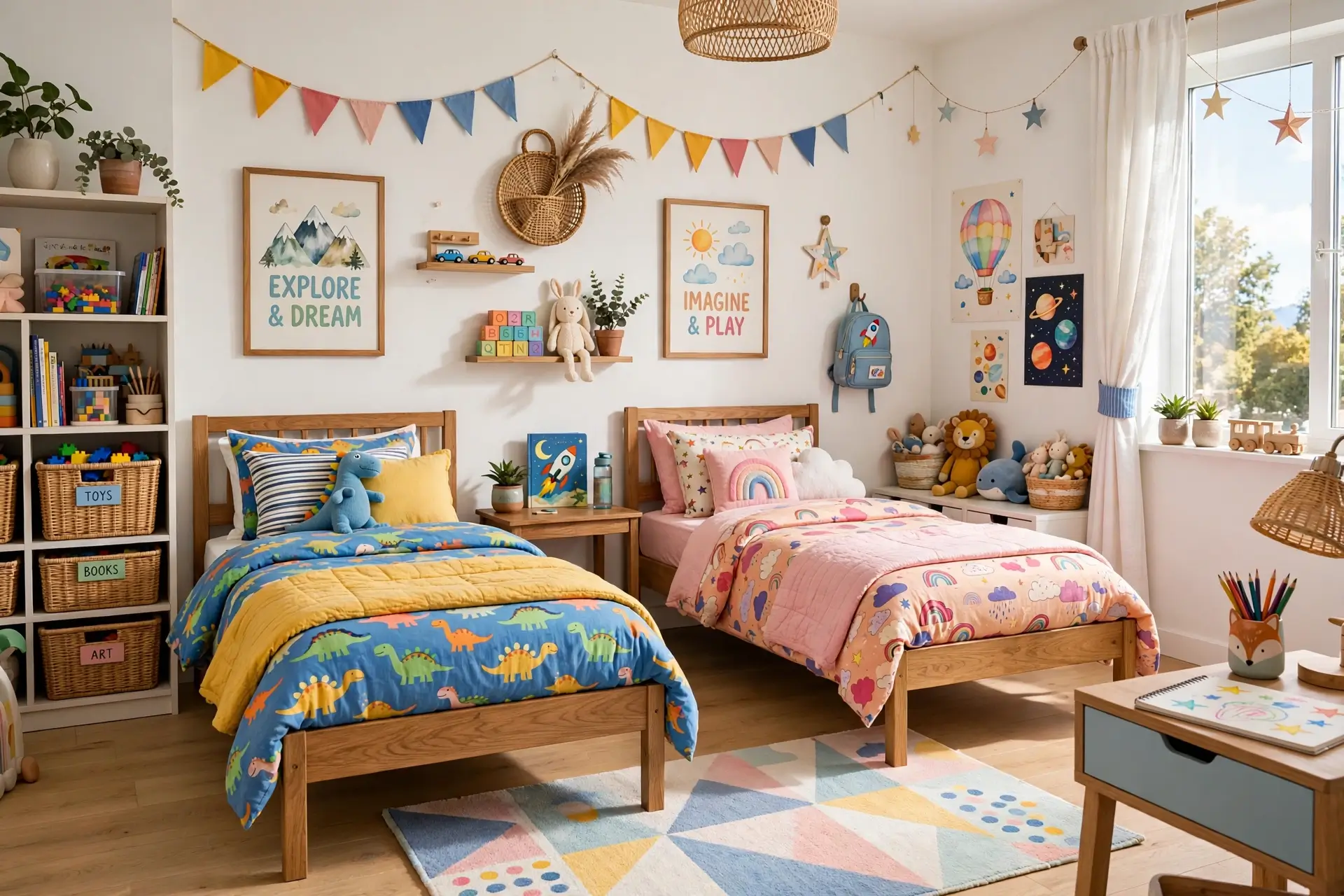
Every parent of room-sharing siblings knows the truth: kids don't fight over rooms, they fight over fairness — and they keep score with the precision of accountants. "Her side is bigger." "He touched my stuff." "Why does she get the window?" The room isn't the problem — the lack of clear boundaries is. That's why this article is structured as a peace treaty: four articles, each solving one classic conflict, each with a reference photo showing the solution in action. Sign all four and the shared room stops being a battleground and starts being what it should be — the place where the best sibling memories are made. Midnight whispers, shared secrets, giggling past lights-out: ask any adult who shared a room as a kid, and the complaints fade while the memories glow. The treaty doesn't just prevent fights; it protects the good stuff.
Before the treaty articles, one principle that governs them all. The golden rule of shared kids rooms: fairness must be visible. Kids measure with their eyes, not with tape measures. Two zones that look equal feel equal, even if one is technically six inches wider. This is why matching bed sizes matter more than matching floor areas, and why identical storage in different colors beats different storage in identical colors. Perceived fairness is fairness to a child. Keep that in mind through every article below. For more kids' spaces for every age, explore our kids room ideas collection.
 A1
Divide the Territory (Visibly)
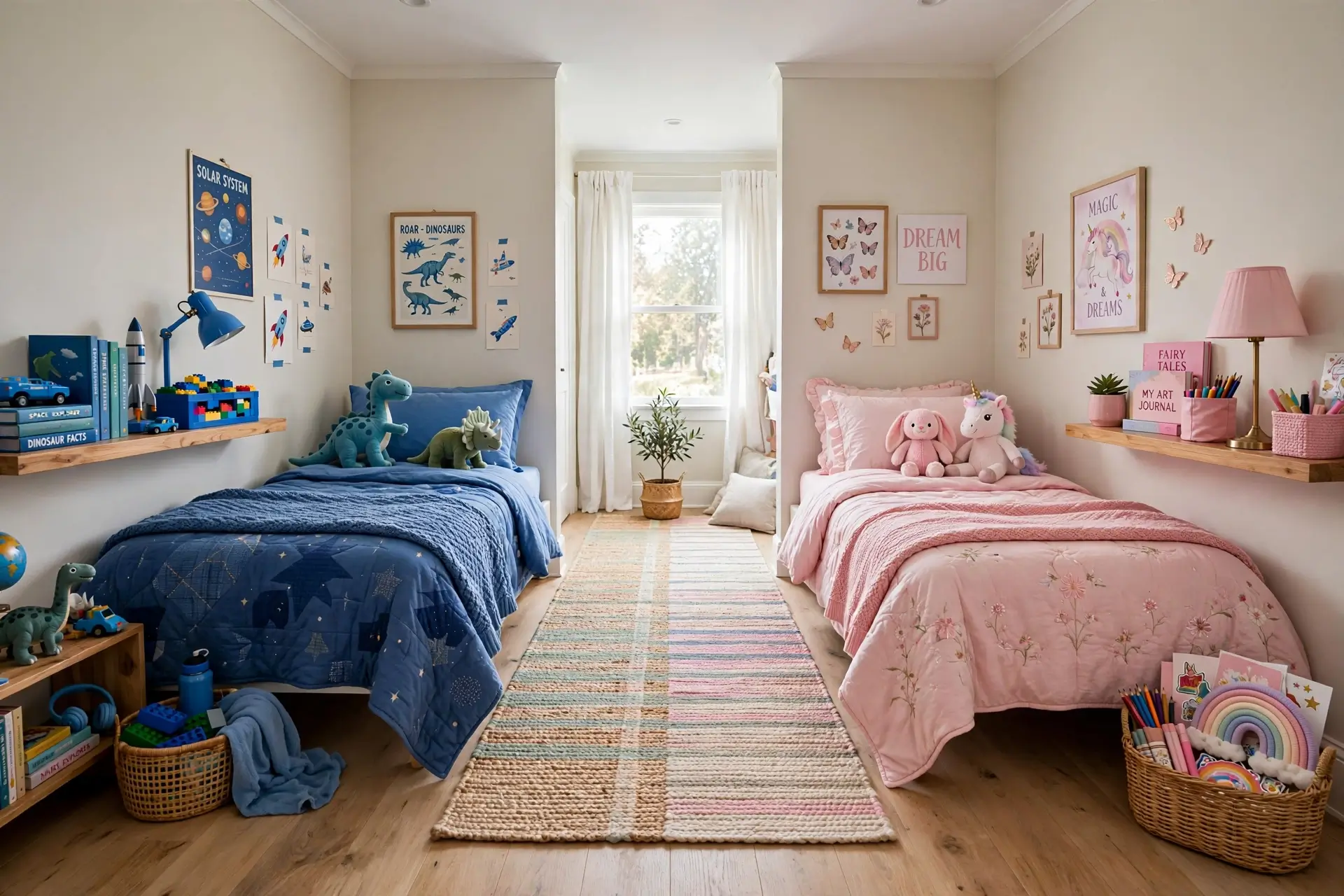
The single most important move: give each child a zone that is unmistakably theirs. Not with a line of tape on the floor (that's a border dispute waiting to happen), but with design — different bedding colors, a rug marking each territory, a personal shelf or pinboard per child. When each kid can point and say "that's mine," most of the fighting evaporates — because the fights were never really about the stuff, they were about recognition. The zones don't need walls; they need identity. A rug, a color, a shelf: small markers that say "you exist here, officially."
📜 How to ratify it
- Split the room visually — a rug under each bed, or a bookshelf as a soft divider. Symmetry signals fairness.
- Color-code everything — bedding, bins, toothbrush cups. Color is the fastest "mine/yours" language kids understand.
- One personal wall each — a pinboard, poster space, or shelf per child where the other may not rearrange. Sovereign territory, respected by all parties including parents.
 A2
The Bunk Equation
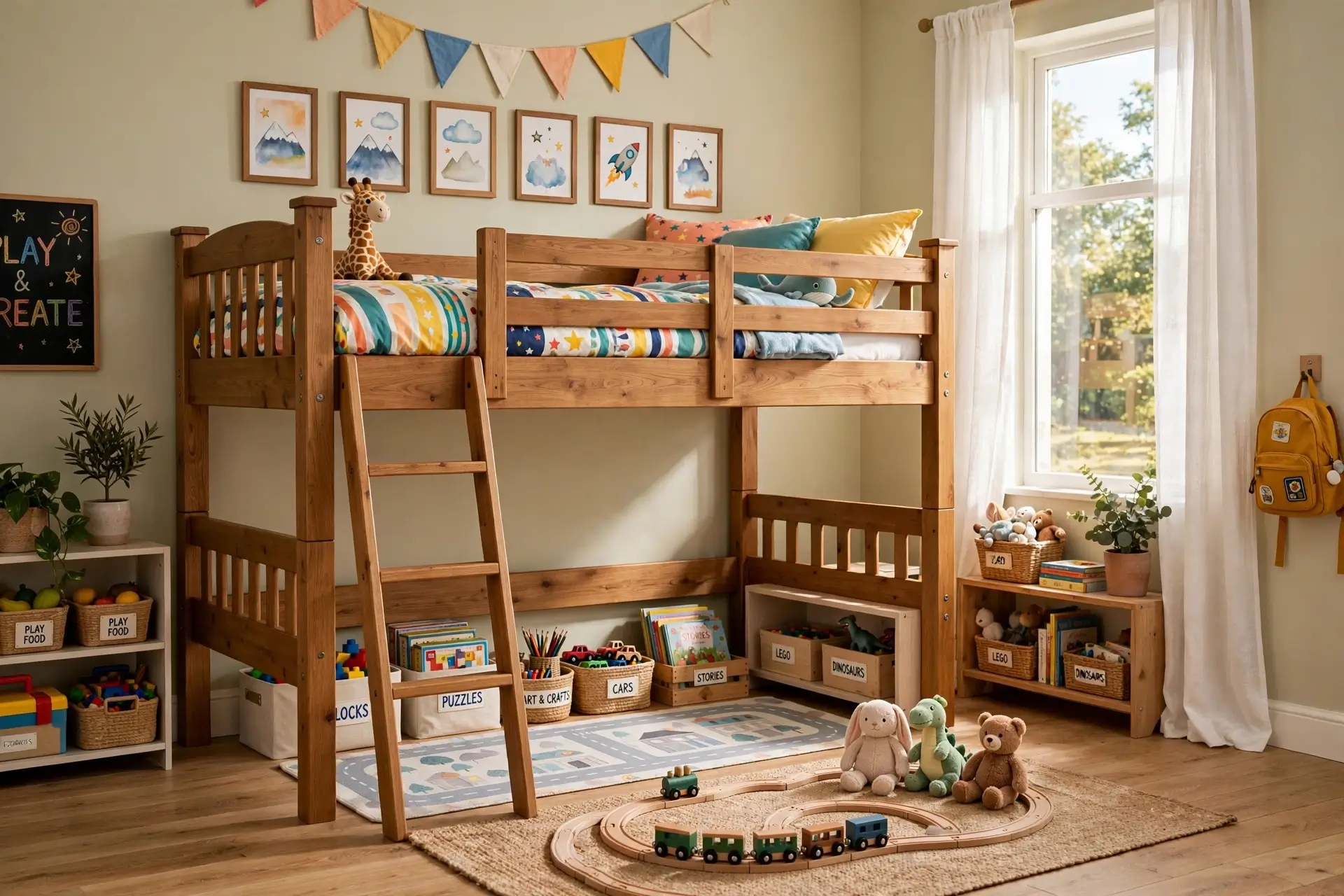
Two beds eat a small room alive. A bunk (or loft) bed gives that floor space back — and floor space is where childhood actually happens: playing, building, sprawling. The top-versus-bottom debate is real, so settle it structurally: rotate monthly, or give the older child first pick in exchange for a concession (choosing the movie, the bigger shelf). Safety first, always — guardrails on both sides, a sturdy ladder or stairs, and age-appropriate use per the manufacturer's guidelines (most recommend top bunks for age 6+). Done right, the bunk isn't just space-saving; it's the room's adventure feature — the thing friends remember about visiting.
📜 How to ratify it
- Measure first — ceiling height must comfortably fit the bunk plus sitting-up space. Cramped top bunks breed resentment.
- Settle top/bottom in writing — a simple rotation schedule on the wall ends the debate forever.
- Claim the freed floor — immediately designate it: play zone, reading corner, desk space. Empty floor gets colonized by clutter.
 A3
Double Everything Smart
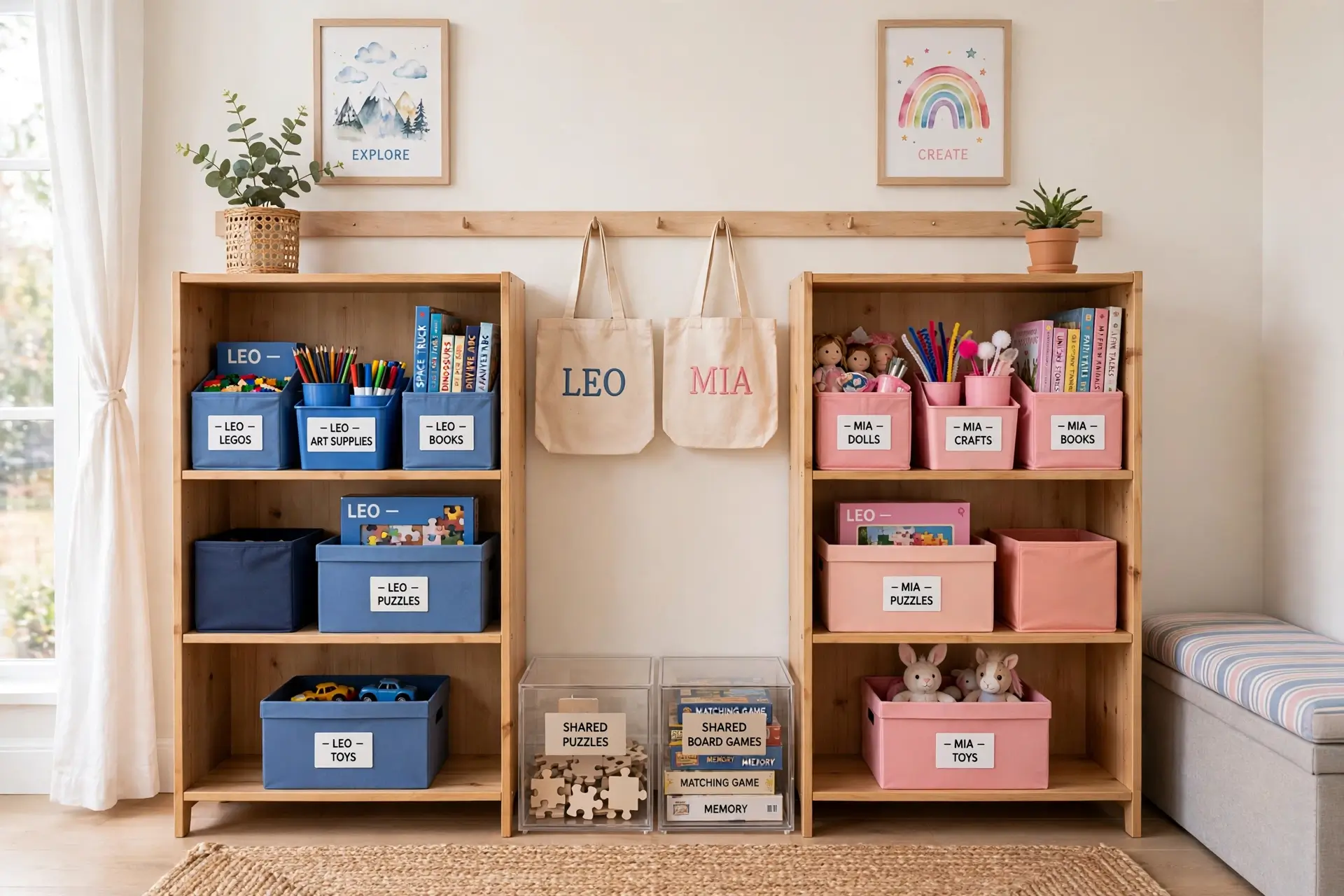
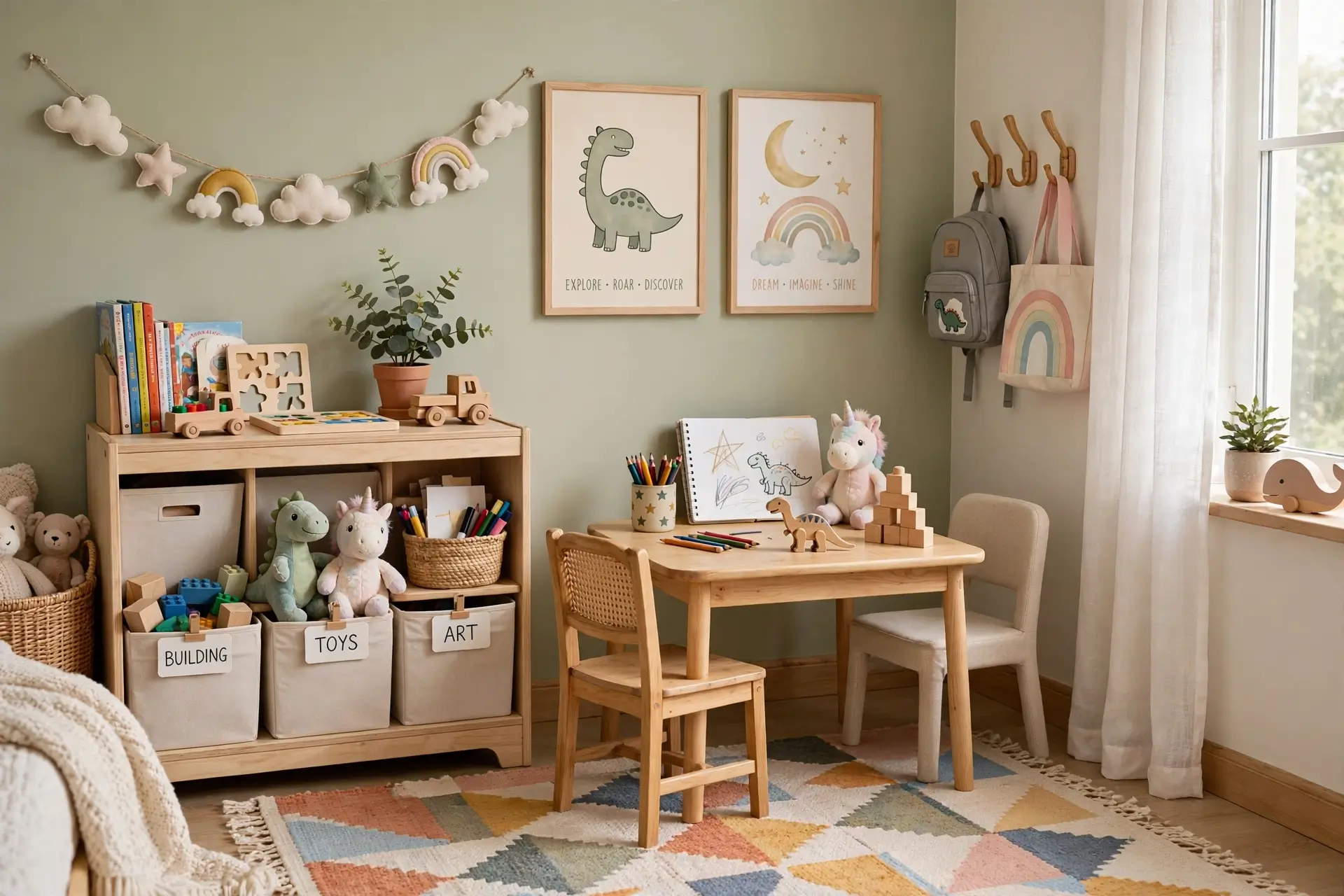
Two kids means two of everything — and "everything" needs a labeled home, or the room becomes a lost-and-found. The system: duplicate storage (two bins, two shelves, two hampers), color-coded per child, with shared items in neutral bins. Labels aren't fussy; they're conflict prevention. When every object has an owner and a home, "who left this here?" stops being a daily interrogation and becomes a rare event. Vertical storage is your best friend — walls hold what floors can't, and high shelves are perfect for the older child's treasures that little hands shouldn't reach.
📜 How to ratify it
- Duplicate, don't share — each child gets their own bins, shelf, and hamper in their color.
- Label everything — names on bins, shelves, even hangers. Clarity now prevents fights later.
- One shared zone — neutral bins for shared toys and books, with a simple "return it where you found it" rule.
 A4
Protect the Neutral Ground
Every shared room needs one space that belongs to both — a play corner, a reading nook, a small table for games and crafts. This is where siblinghood happens instead of sibling rivalry. Decorate it in compromise colors (neither child's "territory color"), stock it with shared toys, and defend it: no one gets to claim the neutral ground. The most harmonious shared rooms aren't just well-divided — they have a well-loved middle. Think of it as the room's living room: nobody sleeps there, everybody uses it, and its existence proves the room belongs to the relationship, not just the individuals.
📜 How to ratify it
- Carve one shared zone — even a corner with a rug, a small table, and two chairs counts.
- Neutral decor — compromise palette, shared art. This space represents "us," not "mine."
- Shared toy library — neutral bins, joint ownership, one simple rule: put it back.
👶👦 The Age-Gap Playbook
Big gap (5+ years)? Give the older child the "grown-up" privileges visibly — the desk, the higher shelf, later lights-out. Younger siblings accept hierarchy when it's acknowledged, not when it's hidden. Safety-gate the little one's zone for small toys if the older has Lego-age pieces.
Close in age? Symmetry is everything — equal zones, equal storage, rotating privileges. Any visible inequality becomes a daily grievance. When in doubt, duplicate.
Boy + girl? Let each zone fully express its owner — the room doesn't need to "match." A shared neutral palette for big furniture plus personal bedding and decor per child keeps it cohesive without forcing sameness. As they approach the teen years, prioritize privacy upgrades: a folding screen for changing, separate storage for personal items, and honest conversations about boundaries.
🧮 Storage Math for Two
Plan storage like this: each child needs one bin for toys, one shelf for books/treasures, one hamper for laundry, and half a closet each. That's the minimum viable system — anything less and belongings colonize the floor within a week. Add 20% extra for growth (toys multiply; it's physics, and birthdays are accelerants). Vertical beats horizontal every time: wall shelves, over-door organizers, and under-bed bins hold the overflow without eating a single square foot of play space.
When Sharing Stops Working
Honesty matters: sharing doesn't work forever for everyone. Watch for the signs — chronic sleep disruption (different schedules that can't be reconciled), genuine distress rather than normal squabbling, or a teenager who desperately needs privacy. These aren't failures of the treaty; they're signals that needs have outgrown the arrangement. If separate rooms aren't possible, upgrade the treaty instead: a curtain divider for visual privacy, noise machines for sleep, staggered bedtimes, and a "do not disturb" signal each child respects. The goal was never sharing forever — it was harmony, whatever form it takes.
Shared Room Mistakes
No visible zones
One blended room with no "mine" areas breeds daily conflict. Fix: visual territories per child (Article 1).
Forcing shared everything
Shared bins for personal treasures = resentment. Fix: duplicate personal storage; share only truly shared items (Article 3).
Ignoring the age gap
Treating a 4-year-old and a 10-year-old as equals backfires. Fix: acknowledge hierarchy with visible privileges for the older child.
No neutral ground
All territory and no common space = roommates, not siblings. Fix: protect one shared zone (Article 4).
The First-Night Checklist
Moving the kids in together? Run this checklist on night one: zones marked (rugs down, colors assigned), beds decided (top/bottom settled, rotation posted), storage labeled (every bin has a name), neutral zone stocked (a few shared toys ready), and rules posted — three max, written together: knock before entering the other's zone, return shared toys, lights-out times. Kids who help write the rules follow the rules. The first night sets the tone for the first year; make it ceremonial, not chaotic.
🌙 The Sleepover Test
You'll know the treaty is working when the room starts passing these quiet tests — none of them about decor, all of them about peace:
- They invite friends over proudly — the room is a showcase, not an embarrassment.
- "That's mine" drops by half — boundaries are clear, so there's less to defend.
- They play together in the neutral zone — the ultimate sign. The room stopped dividing them and started connecting them.
Shared Kids Room FAQs
How do I divide a shared kids room fairly?
Divide it visually, not just physically — rugs, color-coded bedding, and personal shelves per child. Kids judge fairness by eye, so symmetry matters more than exact square footage. Each child needs one clearly "theirs" zone.
What age can siblings start sharing a room?
There's no universal rule — it depends on the children, sleep habits, and space. Many families start when the younger is out of the crib and sleeping through most nights. Consider sleep schedules first: a night-owl teen and an early-sleeping toddler need creative scheduling.
Bunk bed or two separate beds for siblings?
Bunks win on floor space — critical in small rooms — and kids usually love them. Two separate beds win on flexibility and work better with big age gaps. If you go bunk, settle top/bottom with a rotation schedule and follow all safety guidelines.
How do I stop siblings fighting over space?
Give each child sovereign territory (their bed zone + one personal shelf/wall), color-code belongings, and create one shared neutral zone. Most fights are about unclear boundaries — clear ones prevent most conflicts before they start.
How much storage do two kids need in one room?
Minimum per child: one toy bin, one book shelf, one laundry hamper, half a closet. Add 20% for growth. Go vertical — wall shelves, over-door organizers, under-bed bins — to protect play space.
Can a boy and girl share a room?
Absolutely — give each zone its own personality with personal bedding and decor, keep big furniture in a neutral palette, and ensure privacy needs are met as they grow (changing areas, personal space). The room doesn't need to "match" to work beautifully.
Keep exploring: the kids room ideas collection is just getting started, plus bedroom ideas and wall ideas for the rest of the house. Start from the Roomiora homepage if you're new — and may your noble treaty hold.
Malik Ashraf
Founder & Editor, Roomiora. Home-design enthusiast sharing real-life room ideas — tested layouts, honest costs, no showroom fantasies.
More about Malik →