Wooden Desk Setup Ideas: Warmth You Can Feel in Every Grain
Wood is the only desk material that gets better with age. Four chapters on choosing it well, pairing it warmly, and letting it grow beautiful.
 By Malik Ashraf · 12 min read
 🪵 4 WOOD CHAPTERS
Run your hand across a wooden desk and you feel something no laminate can fake: grain, warmth, history. Wood is the only desk material that improves with age — every coffee ring sanded out, every dent, every year of sunlight deepening the color. It's warm and alive in a way cold metal and glass never will be. But wood rewards knowledge and punishes neglect: pick the wrong tone, pair it badly, or ignore basic care, and that warmth turns muddy and tired. These four chapters are everything worth knowing — the grain, the pairings, the green, and the patina. Read them once and you'll never look at a wooden desk the same way — you'll start noticing grain the way wine lovers notice vintages.
And if you're still choosing between materials, remember: wood plays well with everything. It warms up minimal setups and grounds maximalist ones. For the full range of desk styles, browse our desk ideas collection.
Why Wood Wins
There's actual psychology behind wood's appeal. Natural materials reduce stress and increase feelings of warmth and comfort — researchers call it biophilia, our hardwired affinity for nature. A wooden desk is a small daily dose of the forest, right under your hands. It also photographs warmly, ages gracefully, and — unlike trendy materials — never looks dated. A good wooden desk bought today will look right in twenty years. That's not decor; that's an heirloom strategy. There's also a tactile argument: wood is warm to the touch in a way metal and glass never are — on a cold morning, your wrists notice. And unlike synthetic surfaces that look worse every year, wood's small imperfections accumulate into character rather than damage. It's the only material that thanks you for using it.
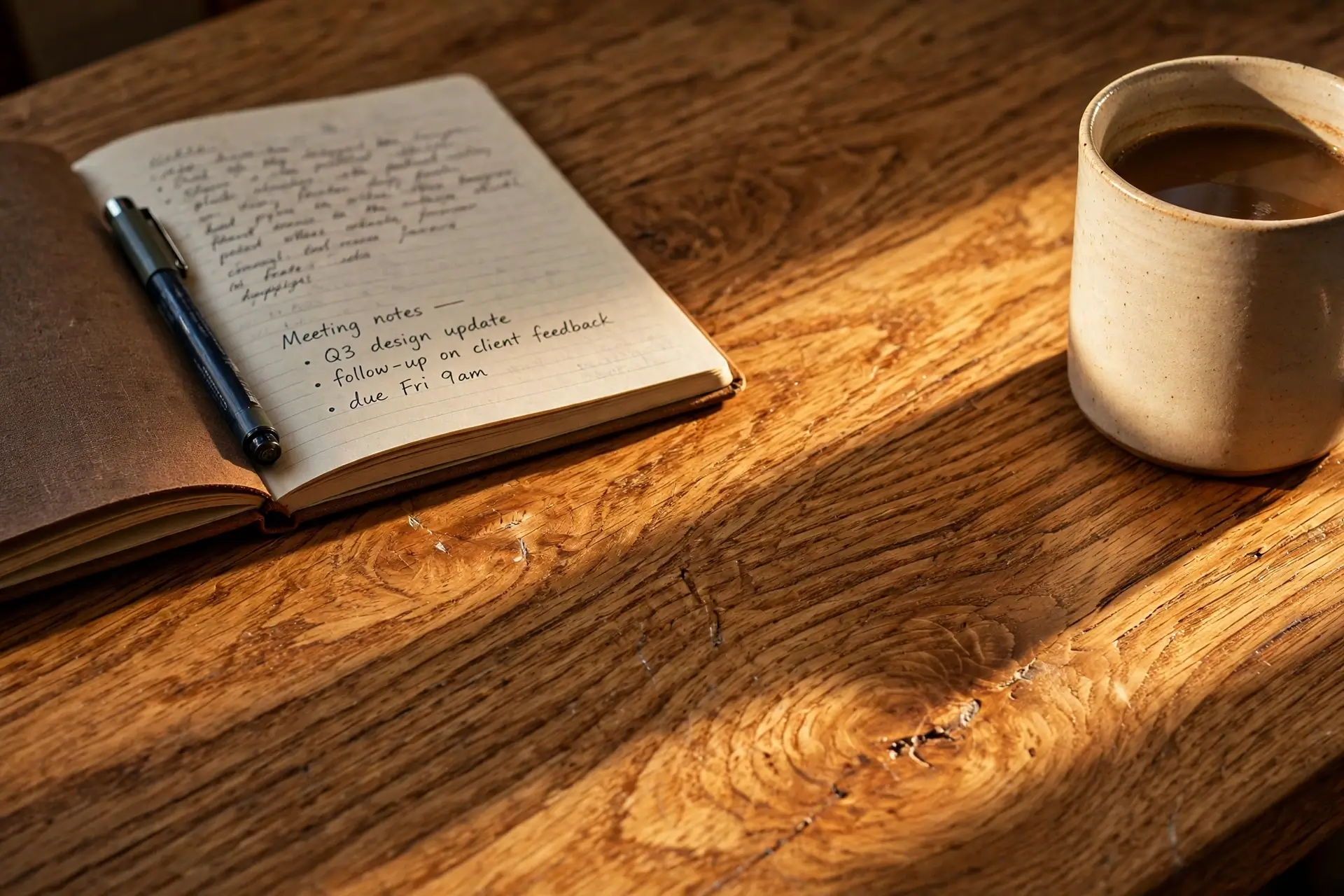 Chapter 1 — Grain
Know Your Grain
Not all wood is the same wood. Oak is golden and grainy — casual, warm, forgiving. Walnut is dark and dramatic — rich, formal, stunning with brass. Pine is pale and soft — Scandinavian, light, but dents easily. Bamboo is linear and modern — sustainable and sleek. The rule: match undertones, not species. A warm oak desk pairs beautifully with warm walnut shelves; a warm desk with a cool grey floor fights all day. Stand back and squint — if the wood tones feel like family, they are. One more practical note: finish matters as much as species. The same oak looks completely different with a natural oil finish (warm, matte, alive) versus a thick glossy varnish (plasticky, cold). When shopping, look past the color swatch to the finish — matte and satin finishes almost always look more expensive than high gloss on wood.
🌲 Grain notes
- Oak: the all-rounder — warm, tough, suits almost any style.
- Walnut: the executive — dark, luxurious, loves brass and leather.
- Pine/rubberwood: the budget hero — light and affordable; embrace the dents as character.
- Reclaimed: the storyteller — unmatched character, check it's properly sealed and stable.
 Chapter 2 — Pairing
The Warm Pairing
Wood's best friends are warm materials: leather, brass, copper, amber glass, wool, canvas. A leather desk mat on oak, a brass lamp on walnut — these combinations feel inevitable because they share wood's warmth. What fights wood: chrome, cold grey plastic, neon. You don't have to banish modern tech — just warm its edges. A laptop on a wooden desk looks fine; a laptop on a leather mat on a wooden desk looks considered — and that single layer also protects the wood from heat and scratches, so it's the hardest-working decor item you'll own. The pairing principle: every object on a wooden desk should feel like it could have existed fifty years ago, even if it didn't.
🌲 Grain notes
- Leather desk mat — the single best pairing; protects the wood and ages alongside it.
- Brass or warm-metal lamp — echoes the wood's golden undertones.
- Wool throw on the chair — softens the whole corner, not just the desk.
- Ceramic or amber vessels — for pens, plants, coffee. Warm containers for warm wood.
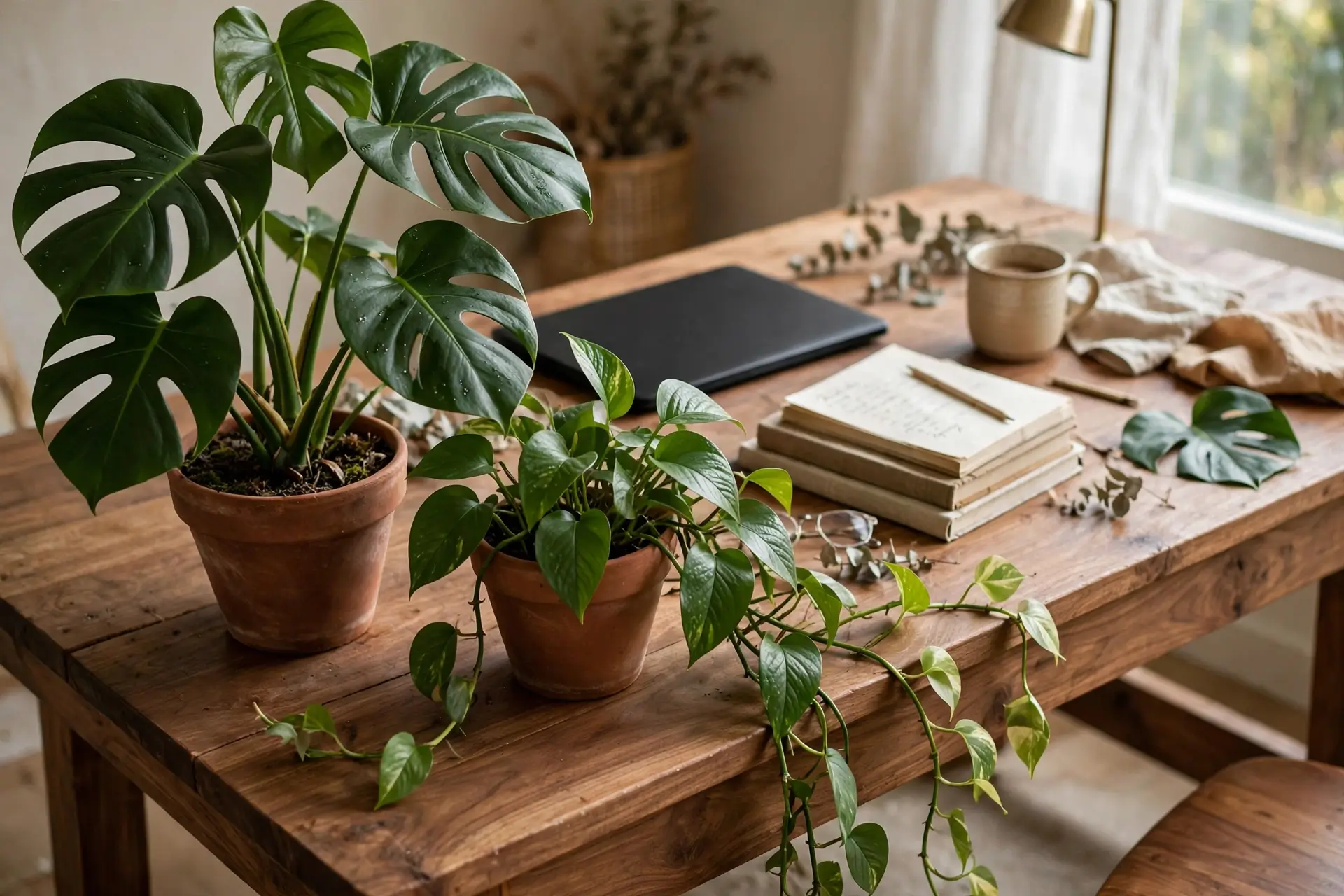 Chapter 3 — Green
Green + Grain
Wood and plants are the oldest design partnership there is — forest floor logic. Green against warm wood is effortlessly beautiful: a trailing pothos softening a walnut edge, a monstera rising beside an oak desk, herbs in terracotta on pine. The pots matter: terracotta, ceramic, or woven baskets continue the natural story; plastic nursery pots break it (slip them inside something beautiful). One medium plant plus one small one is plenty — wood is already the star; green is the supporting actor that makes it shine. If your desk gets low light, don't force it: a high-quality faux plant in a beautiful pot still delivers the color story, and nobody will interrogate its photosynthesis during a video call.
🌲 Grain notes
- Trailing plants (pothos, philodendron) — soften hard desk edges beautifully.
- Upright plants (snake plant, monstera) — add height beside the desk, not on it.
- Terracotta pots — the classic wood companion; their earthiness matches grain perfectly.
- Protect the wood — saucers under every pot, always. Water rings are the one patina nobody wants.
 Chapter 4 — Patina
The Patina Principle
Here's what makes wood different from every other desk material: it's supposed to change. Sunlight deepens the color. Hands polish the edges. Small dents become character. This is called patina, and it's the reason a 50-year-old wooden desk can be more beautiful than a new one. The patina principle: buy wood for the long term, maintain it lightly, and let time do the styling. Oil it once or twice a year, wipe spills promptly, use coasters and mats — and then relax. The desk is aging with you, not against you. Compare that to a white laminate desk, which looks its best on day one and declines from there. Wood inverts the curve: day one is merely the beginning of the story.
🌲 Grain notes
- Oil yearly — a light coat of hardwax oil or mineral oil keeps wood fed and glowing.
- Coasters + mats — prevention beats restoration; a leather mat is both decor and armor.
- Embrace small marks — the dent from 2024 becomes the story of 2034. Character compounds.
- Sunlight awareness — even fading is charming; uneven fading (a laptop-shaped pale spot) is not. Rotate items occasionally.
Wood + Tech: Making It Work
Modern work means cables, monitors, and chargers — none of which are wooden. The trick is warm camouflage: run cables through a wooden cable box or a fabric sleeve in a natural tone, choose peripherals in warm colors (cream keyboards, walnut monitor stands exist and look incredible), and let the tech sit on leather or cork mats rather than directly on the grain. A monitor arm in black is fine — one cool element reads as intentional. The goal isn't a tech-free fantasy; it's tech that respects the wood. When the tools of work sit comfortably on a natural surface, the whole setup feels calmer — and you feel calmer using it.
🧴 Wood Care Basics
Twice a year, five minutes each time — that's the entire maintenance burden of a wooden desk. Here's the whole routine:
- Clear and wipe — damp (not wet) cloth, mild soap. Dry immediately.
- Oil lightly — thin coat of suitable wood oil, buffed in with the grain. Less is more.
- Rest overnight — let it cure before piling the desk back up.
- Daily rule — coasters for drinks, mats for laptops, saucers for plants. That's 95% of wood care, handled in seconds.
🪑 Wood in Small Spaces
Wood works beautifully in small rooms — its warmth makes tight spaces feel inviting rather than cramped, which is exactly what small spaces need most. Choose lighter woods (oak, pine, bamboo) to keep things airy, keep the desk profile slim, and let the floor show beneath it so the room keeps breathing. A small wooden desk with one plant beats a large cold one every time; coziness scales down perfectly.
Wooden Desk Mistakes
Clashing undertones
Warm oak desk + cool grey everything = visual argument. Fix: match undertones across wood pieces (Chapter 1).
Plastic everything on top
Neon plastic accessories kill wood's warmth instantly. Fix: warm pairings — leather, brass, ceramic (Chapter 2).
No protection
Wet mugs directly on wood = rings forever. Fix: coasters, mats, saucers — always (Chapter 4).
Thick plastic-like varnish
Heavy gloss varnish looks cheap and can't be spot-repaired. Fix: oil finishes age better and repair with a rag.
🏛️ The Heirloom Test
You'll know your wooden desk setup is right when you catch yourself thinking in decades instead of seasons — when the question shifts from "does this look good?" to "what will this look like in ten years?":
- It looks better than the day it arrived — the grain deepening, the edges softening. Patina in progress.
- Everything on it feels chosen — leather, brass, green, grain. A family of warm materials.
- You'd keep it forever — the ultimate test. A wooden desk you can't imagine replacing isn't furniture anymore. It's an heirloom, full stop.
Wooden Desk Setup FAQs
Which wood is best for a desk?
Oak is the best all-rounder — warm, tough, and suits any style. Walnut is the premium pick for a rich, executive look. Pine and rubberwood are great budget options if you embrace their softer character. For sustainability, bamboo is excellent.
How do I protect my wooden desk from damage?
Coasters for every drink, a desk mat under your laptop and wrists, saucers under plants, and prompt wipe-ups of spills. That covers 95% of protection. An annual light oiling keeps the wood fed and resilient.
What goes well with a wooden desk?
Warm materials: leather desk mats, brass lamps, ceramic vessels, wool throws, and green plants. Keep one cool accent for contrast, but let warmth dominate — it's wood's natural language.
Is a wooden desk good for a home office?
Yes — wood's warmth reduces the sterile feeling of long workdays, it photographs beautifully on video calls, and it ages gracefully. Choose a harder wood (oak, walnut) for heavy daily use.
How do I remove water rings from a wood desk?
For light marks, gentle buffing with a suitable wood oil often works. Deeper rings may need light sanding and refinishing of the spot — which is exactly why oil finishes beat thick varnish: they're spot-repairable. Prevention (coasters!) is always easier.
Should I buy a new or vintage wooden desk?
Vintage often wins — the patina is already started, solid wood construction was more common, and prices are lower. Check stability, smell (mustiness), and that the top is flat. A quick oil can transform a tired vintage find.
Keep exploring: the desk ideas collection keeps growing, plus wall ideas for the wall behind your wooden desk — a warm gallery wall loves warm wood. Start from the Roomiora homepage if you're new here.
Malik Ashraf
Founder & Editor, Roomiora. Home-design enthusiast sharing real-life room ideas — tested layouts, honest costs, no showroom fantasies.
More about Malik →