Kids Room Color Ideas: Pick a Palette They'll Love for Years
Four kid-tested palettes — sunny, calm, bold, and grow-with-me — each with a swatch strip, a reference photo, honest pros and cons, and absolutely zero repaint regrets.
 By Malik Ashraf · 11 min read
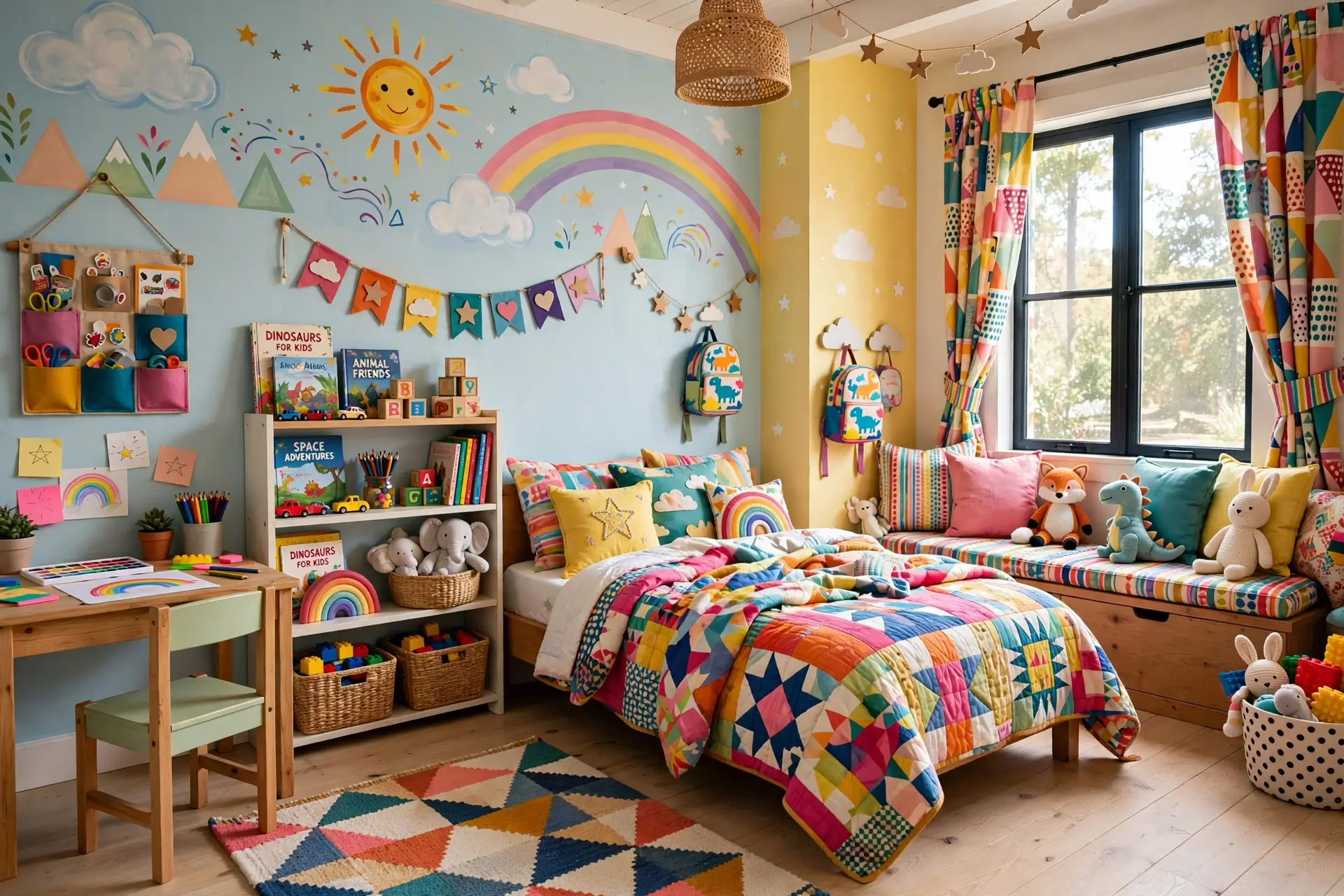 🎨 4 KID PALETTES
Ask a kid what color their room should be and you'll get a passionate answer in half a second — neon green, hot pink, "rainbow." Ask them again in two years and it'll be something else entirely. That's the central tension of kids room color: their certainty is absolute, passionate — and temporary. The solution isn't to ignore their wishes (it's their room, and they'll remind you daily) or to surrender to every whim (it's your paint budget and your weekends). It's to pick palettes with a smart structure — colors that delight now and adapt later. Four of them below, each with a swatch strip showing the exact palette and a photo of it in action. Think of each palette as a recipe: the proportions matter as much as the ingredients, and every one has been chosen to survive contact with real childhood — sticky fingers, changing obsessions, and all.
The #1 rule before the menu: let the child choose — from your shortlist. Present two or three parent-approved palettes and let them pick the winner. They get ownership, you get sanity, and nobody ends up with black walls at age seven. Bonus: kids who chose their palette take better care of the room — it's theirs in a way a dictated color never is. For the full kids' collection, see our kids room ideas.
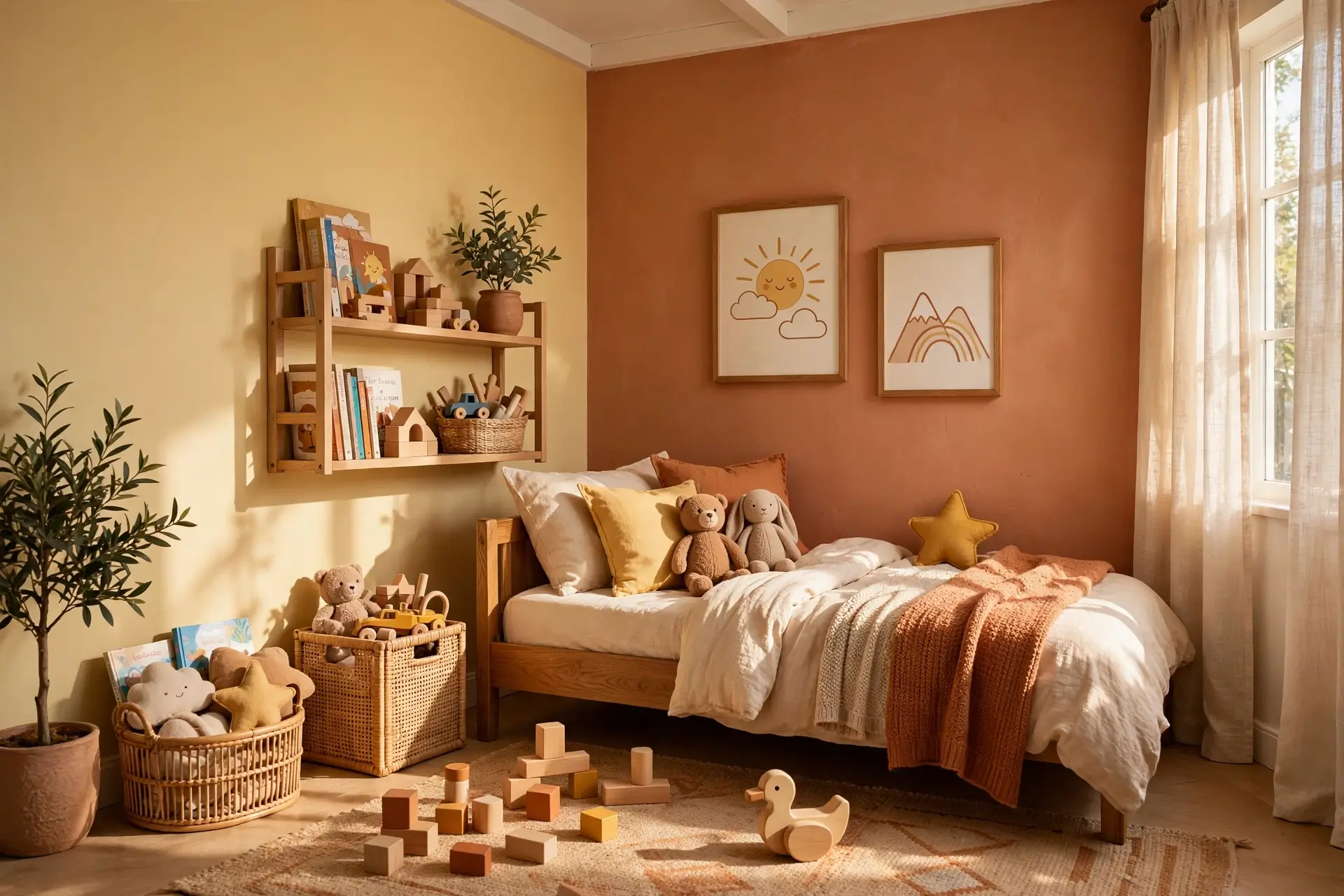
Sunny & Warm
Yellows, terracotta, warm cream — the palette of perpetual golden hour. Warm colors make rooms feel cozy and cheerful, absolutely perfect for kids who love energy and for north-facing rooms that need all the warmth they can get. The trick is keeping yellows soft (butter, honey) rather than neon — saturated yellow on four walls is a lot for anyone, including the kid who demanded it. Warm palettes also photograph beautifully, which matters more than you'd think: these are the rooms of birthday mornings and Christmas Eves, and warm tones make every photo glow.
🎨 How to use it
- Walls: warm cream or soft butter — the sunny base that never overwhelms.
- Accents: terracotta bedding, honey-yellow cushions, warm wood furniture.
- Best for: energetic kids, darker rooms, anyone who wants "happy" as a room's job description.
- Watch out: test in evening light — some yellows go muddy under warm bulbs.
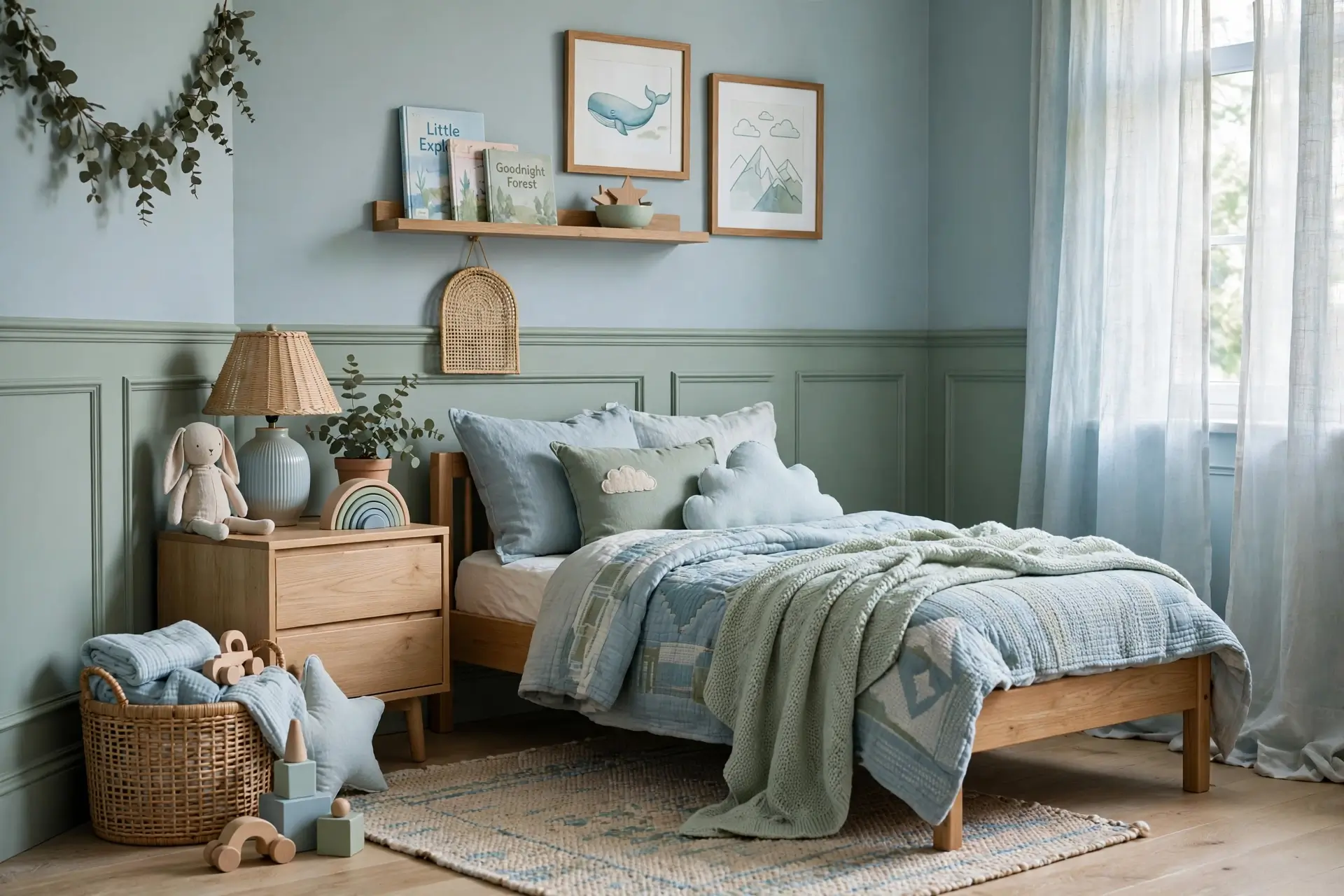
Calm & Cool
Soft blues, sage greens, misty whites — the palette of deep breaths. Cool colors are genuinely calming, which makes this the perfect palette for kids who struggle to wind down, for shared rooms where peace matters, and for small rooms (cool colors visually recede). A blue-green room feels like an exhale at the end of a loud day. Keep it from feeling cold with warm wood furniture and cozy textiles — cool walls, warm everything else. This is also the palette most recommended by sleep-conscious parents, and for good reason: it's hard to feel wired in a room that looks like a misty morning.
🎨 How to use it
- Walls: soft sage or powder blue — calm without being babyish.
- Accents: deeper teal or forest cushions, natural wood, cream bedding.
- Best for: light sleepers, anxious kids, shared siblings, small spaces.
- Watch out: north-facing rooms need the warmer end of blue-green to avoid feeling chilly.
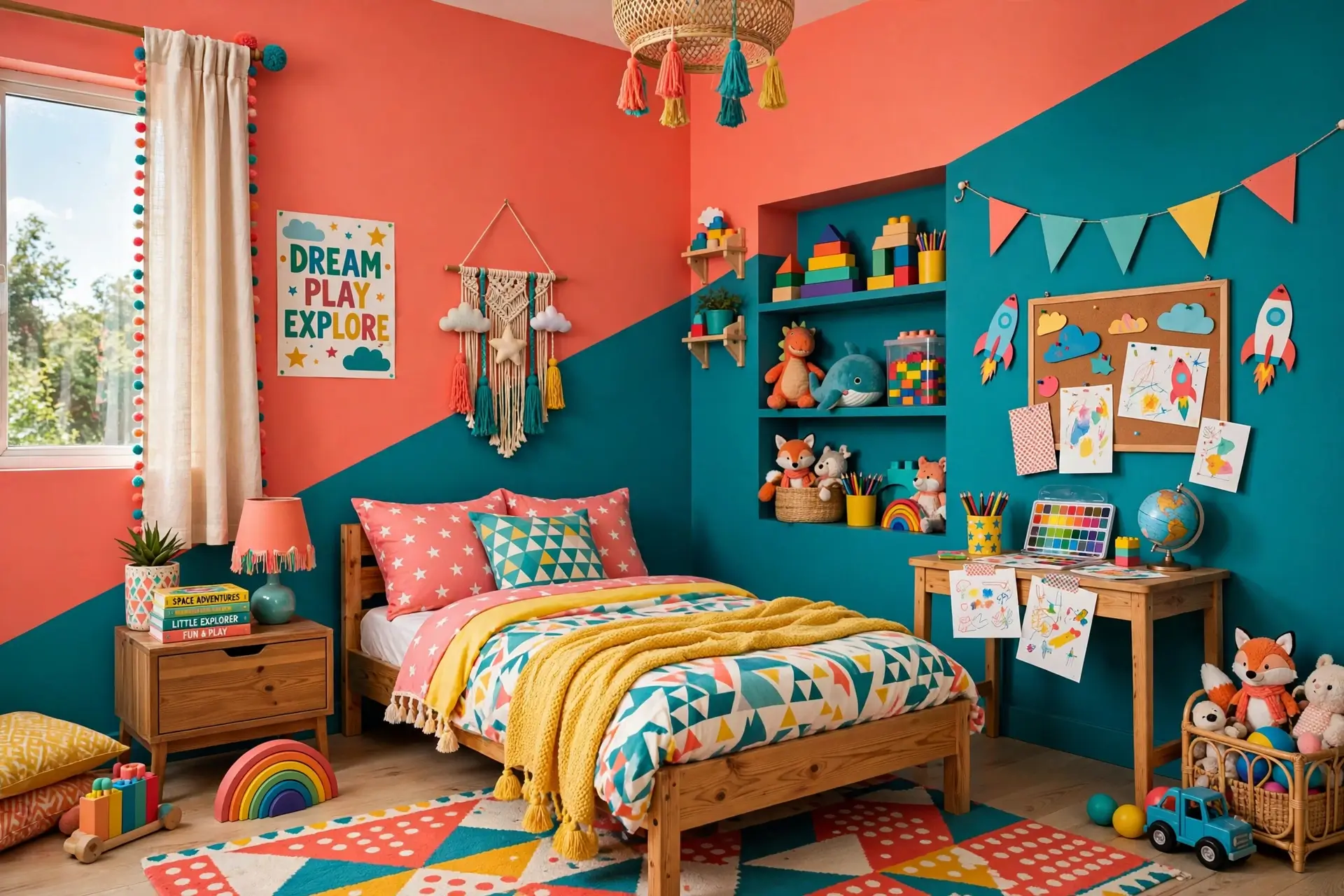
Bold & Playful
Coral, teal, sunny yellow pops — the perfect palette for kids with big personalities. Bold doesn't mean chaotic: the secret is containment. One color-blocked wall (not four), bold bedding against neutral walls, or a vibrant rug anchoring calm surroundings. Bold color in doses reads as joyful; bold color everywhere reads as exhausting — including for the kid who asked for it. Give them the wow, but frame it. Color blocking is your best technique here: a painted arch behind the bed, a bold stripe at chair-rail height, or a single mural wall. It delivers maximum impact per brushstroke and repaints in an afternoon when tastes change.
🎨 How to use it
- Walls: neutral base with ONE bold wall — color blocking, an arch, or a mural stripe.
- Accents: go wild — bright bedding, colorful art, vibrant toy storage. Accents are cheap to change.
- Best for: creative kids, playrooms, anyone whose personality fills the room already.
- Watch out: keep bold away from the bed wall if sleep is a struggle — excitement has a bedtime too.
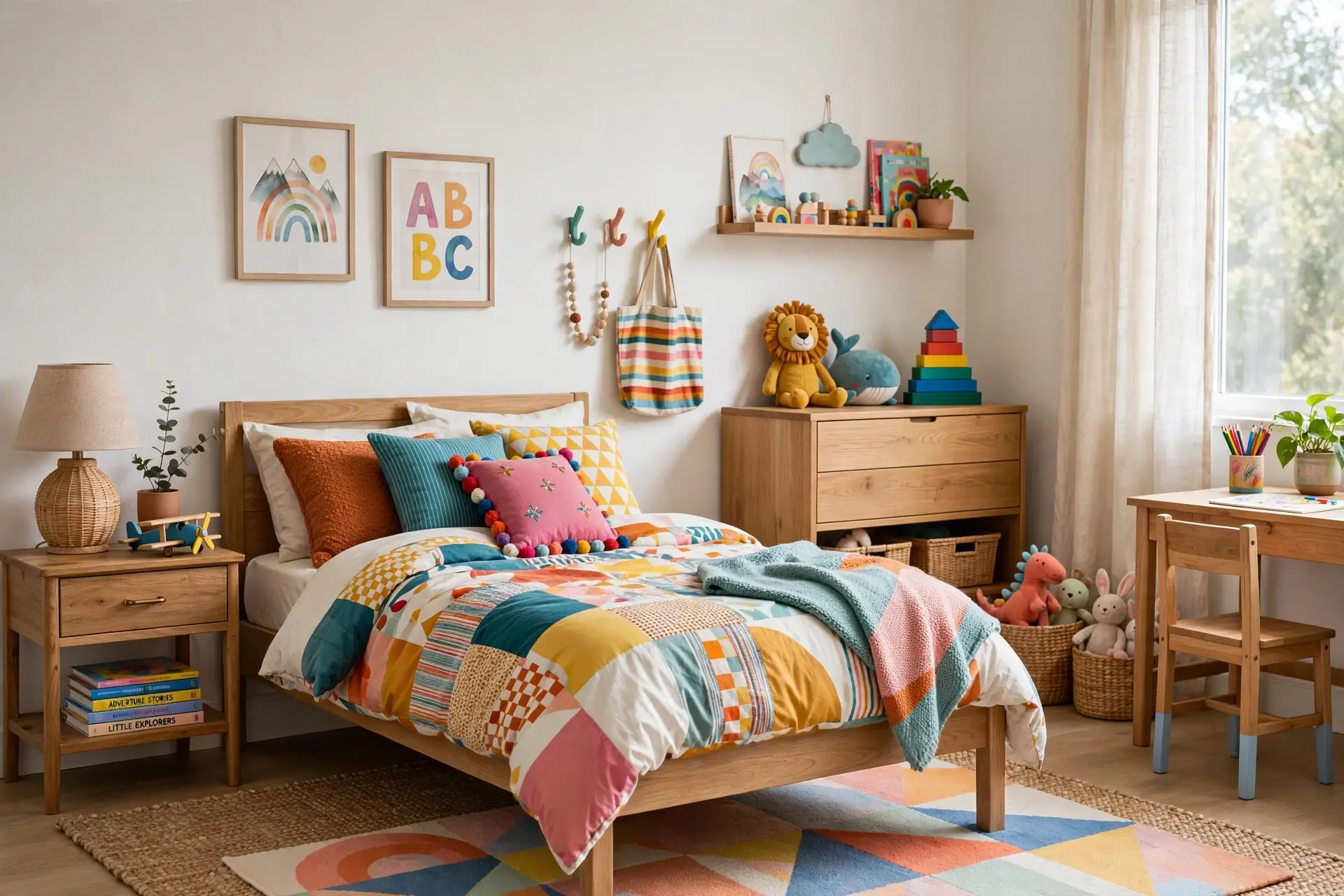
Grow-With-Me Neutrals
Warm whites, greige, soft stone — with color living entirely in swappable accents. This is the smart strategic parent's palette: the expensive parts (walls, big furniture) stay neutral forever, while bedding, art, rugs, and cushions carry the kid's current obsession. Dinosaur phase? Dino bedding. Space phase? Swap it. The room evolves for the price of textiles, and it never needs repainting. The least exciting palette on day one — and the smartest by year five. Parents who choose this route consistently report the lowest decor stress: no repainting marathons, no arguing over wall colors, just a fresh set of bedding when a new obsession arrives. Boring walls, thrilling room.
🎨 How to use it
- Walls: warm white or light greige — the forever base.
- Accents: 100% kid's choice — bedding, posters, rugs, cushions in whatever they love now.
- Best for: kids whose tastes change monthly, rental homes, parents who hate repainting.
- Watch out: neutrals need texture to avoid flatness — mix linen, wood, and woven elements.
📐 The 60-30-10 Rule (Kid Edition)
- 60% — the calm base: walls and big furniture in your palette's lightest tone. This is what the eye rests on, and it does most of the visual work.
- 30% — the supporting color: bedding, curtains, rugs in the mid-tone. This carries the palette's personality and sets the room's mood.
- 10% — the fun pop: art, cushions, toys in the boldest color. Small doses, big joy — and the easiest to change.
- Kid veto power: let them own the 10%. It's their room's jewelry — let them pick it, change it, and regret it freely. The 10% is where experimentation belongs.
Paint Finish Matters (Really)
With kids, the finish matters as much as the color. Flat paint shows every scuff and can't be scrubbed; eggshell or satin finishes wipe clean and still look soft — they're the sweet spot for kids rooms. Save high-gloss for trim and doors, where it adds a crisp contrast and survives years of small hands. Whatever color you choose, buy washable paint — the premium over standard paint is small, but the ability to erase crayon, fingerprints, and mystery smudges without repainting is genuinely priceless over the years. Ask for "scrubbable" on the label — not all washables are equal, and the difference shows up around year two.
🔍 Small Room Color Tricks
Small kids rooms love light colors — they bounce light and visually expand. But "light" doesn't mean "white": pale sage, soft butter, and powder blue all expand while adding personality. One more trick: paint the ceiling a whisper of the wall color (not stark white) — it makes low ceilings feel intentional instead of oppressive. And keep the floor visible: lighter rugs over dark floors lift the whole room. Mirrors help too — one well-placed mirror doubles the light and the sense of space, and kids love checking themselves out anyway.
Don't Forget the Ceiling
The ceiling is the fifth wall, and in a kid's room it's prime real estate — it's what they stare at falling asleep. A soft tint of the wall color makes the room feel cocooned; glow-in-the-dark stars are a beloved classic for a very good reason; and a bold ceiling with neutral walls flips the usual script beautifully. Whatever you do, don't default to stark white without thinking — in a colorful room, a white ceiling can feel disconnected, like the room gave up halfway.
Kids Color Mistakes
Four bold walls
Neon on every wall overwhelms — even the kid who begged for it. Fix: one bold wall + neutral rest (Palette 3).
Theme-locked paint
Painting the whole room "dinosaur green" dates it to one phase. Fix: themes live in accents; walls stay flexible (Palette 4).
Ignoring light direction
North-facing rooms make cool colors feel cold; south-facing intensify warm ones. Fix: test swatches on the actual wall, in morning and evening light.
No kid input at all
A "perfect" palette they hate is a failed room. Fix: parent shortlist, kid picks the winner — ownership matters.
🗓️ The 5-Year Test
Before you commit to gallons of paint, do this 30-second mental exercise: fast-forward five years and picture the same room with a taller kid, different obsessions, and homework on the desk. The palette passes the test if:
- It survives a taste change — the bold lives in accents you can swap, not walls you must repaint.
- It works at twice the age — imagine the room at ten, not just at five. Sage, warm neutrals, and soft blue pass; character-mural walls don't.
- You'd still like it — you're the one repainting if it fails. Pick a palette the whole family can live with, because resentment over a wall color is a silly thing to carry for five years.
Kids Room Color FAQs
What are the best colors for a kids room?
It depends on the goal: warm yellows and terracotta for cheer, soft blues and sage for calm, bold accents for personality, or warm neutrals for longevity. The best palette is one the child likes and the parent can live with for years.
What color helps kids sleep better?
Soft, muted cool tones — pale blue, sage green, lavender grey — are the most sleep-friendly. Avoid bright reds and oranges on walls near the bed; save energetic colors for play areas and accents.
Should I let my child pick their room color?
Yes — but from a parent-approved shortlist. Offer two or three palettes you'd be happy with and let them choose the winner. They get ownership, you avoid black walls and repaint regret.
What colors make a small kids room look bigger?
Light, warm-leaning colors — soft cream, pale sage, powder blue, butter yellow. They reflect light and visually recede. Keep the ceiling a whisper of the wall color rather than stark white for a cohesive, spacious feel.
How do I pick colors for a boy and girl sharing?
Choose a neutral base everyone agrees on, then give each child their zone's accent color. Sage, warm white, and soft grey bases work beautifully with any accent pair — no one's territory has to match.
How often should I repaint a kids room?
With a grow-with-me strategy, rarely — neutral walls with swappable accents can last from toddler to teen. If you go bold on walls, expect a refresh every 3–5 years as tastes change. Washable paint finishes are worth it with kids.
Keep exploring: the kids room ideas collection keeps growing, plus bedroom ideas and wall ideas to complete the room. Start from the Roomiora homepage if you're new here — and let them pick the 10%.
Malik Ashraf
Founder & Editor, Roomiora. Home-design enthusiast sharing real-life room ideas — tested layouts, honest costs, no showroom fantasies.
More about Malik →